
When Remi, an energetic young learner from the United States, first walked into my intervention session four weeks ago, I was met with challenges that any educator would find daunting: nearly illegible handwriting, poor pencil grip, reversed letters in spelling, disorganized thoughts in writing, and visible difficulty with sustained attention. His comprehension of texts was fragmented, and his reading vocabulary was stuck around Grade 2 level.
As an experienced English Language interventionist, I’ve worked with diverse learners, but Remi’s case required more than routine teaching—it demanded tailored intervention, patience, and a deep dive into the root of his learning struggles.
Identifying the Red Flags
The signs were hard to ignore:
- Handwriting challenges: Giraffe letters were formed incorrectly from bottom to top
- Fine motor weakness: His pencil grip was so poor that he could hardly control letter formation.
- Spelling issues: Frequent letter interpositions and reversal.
- Line disorientation: Words constantly fell off the writing lines.
- Postural discomfort: He leaned excessively on his lower limbs while seated, making extended writing sessions unbearable.
- Comprehension gaps: He could only decode familiar Grade 2 vocabulary.
- Attention span issues: Easily distracted by minimal stimuli.
At first glance, these symptoms hinted at potential dysgraphia, dyslexia, and a slight trace of ADHD. However, I knew that labels shouldn’t define learners—and definitely not prematurely.
Laying the Right Foundation
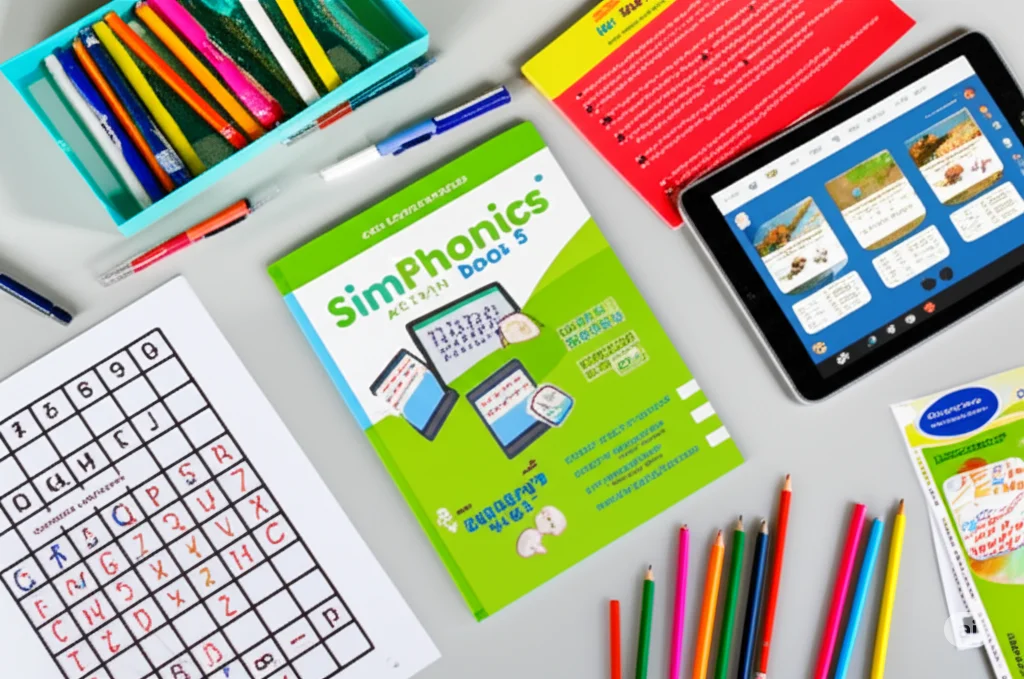
Rather than rushing into advanced materials, I turned to one of my go-to tools: SimPhonics Activity Book 5, a resource usually reserved for Grade 1 pupils. This wasn’t a step backward—it was a deliberate move to rebuild essential foundations.
We began with:
- Letter formation practice
- Digraphs and trigraph blending
- Consistent handwriting drills
- Digital tools to complement learning and engage him through multisensory formats
Through carefully scaffolded instruction and one-on-one support, I saw the light begin to flicker in Remi’s eyes. His lines were straighter, his grip more stable, his spelling more accurate, and his confidence visibly growing.
Rethinking the “Media Generation”
At our final session, I sat down with Remi’s parents for a reflective briefing. I pointed out what I believe is a growing challenge among many young learners today—excessive media engagement without structure. The screen has become both a babysitter and a pacifier. Combined with limited parental supervision, overindulgence, and lack of consistent writing practice, it breeds poor posture, weak fine motor development, and low stamina for written tasks.
The parents were beyond thankful. They called the program “magical” and pleaded for continued virtual sessions after his return to the U.S.
A Word for Educators in Nigeria
Too often, there’s an assumption that the best practices, materials, and expertise must come from “outside”—from the West. But Remi’s journey is a reminder that we have competent, highly skilled educators in Nigeria doing transformational work every day.
Our educational system can be revamped. It starts with teachers who are willing to step beyond their comfort zones, out of “performance zones” into learning zones. It requires training, research, innovation, and yes, heart.
Let it be known: Teaching is not a fallback career. It is a noble, intellectual, and deeply impactful profession. We shape minds. We don’t just teach skills—we change lives.
Moving Forward
Remi heads back to the States today—not as a perfect student, but as a better student. A child who now sees learning not as punishment, but as a process. And I, too, return to my work more inspired—knowing that what we do matters, one child at a time.